
A Legacy of Over 38 Years of Grassroots Commitment
Shantha Jeeva Jyothi (SJJ) is a non-governmental voluntary organization in Bengaluru, founded in 1988 by professional social workers and medical personnel. Established with the core conviction that every marginalized individual deserves health, human dignity, and freedom from exploitation, SJJ has worked continuously across Karnataka for over 38 years.
Origins & Foundation Journey
In 1988, Shantha Jeeva Jyothi was established by a dedicated collective of professional social workers and medical personnel to address severe health disparities and social ostracism faced by people affected by leprosy and marginalized families in urban Bangalore.
Recognizing SJJ's clinical discipline and field commitment, the Government of Karnataka and the Bangalore City Corporation (BCC) allocated 39 urban municipal wards to SJJ under the National Leprosy Eradication Programme (NLEP). Furthermore, the Bangalore City Corporation offered an unutilized Health Center building to SJJ, enabling the organization to deliver regular clinical care, wound dressing, and supervised multi-drug therapy (MDT). Through these sustained efforts, over 3,150 persons identified with leprosy have been successfully cured of the disease.
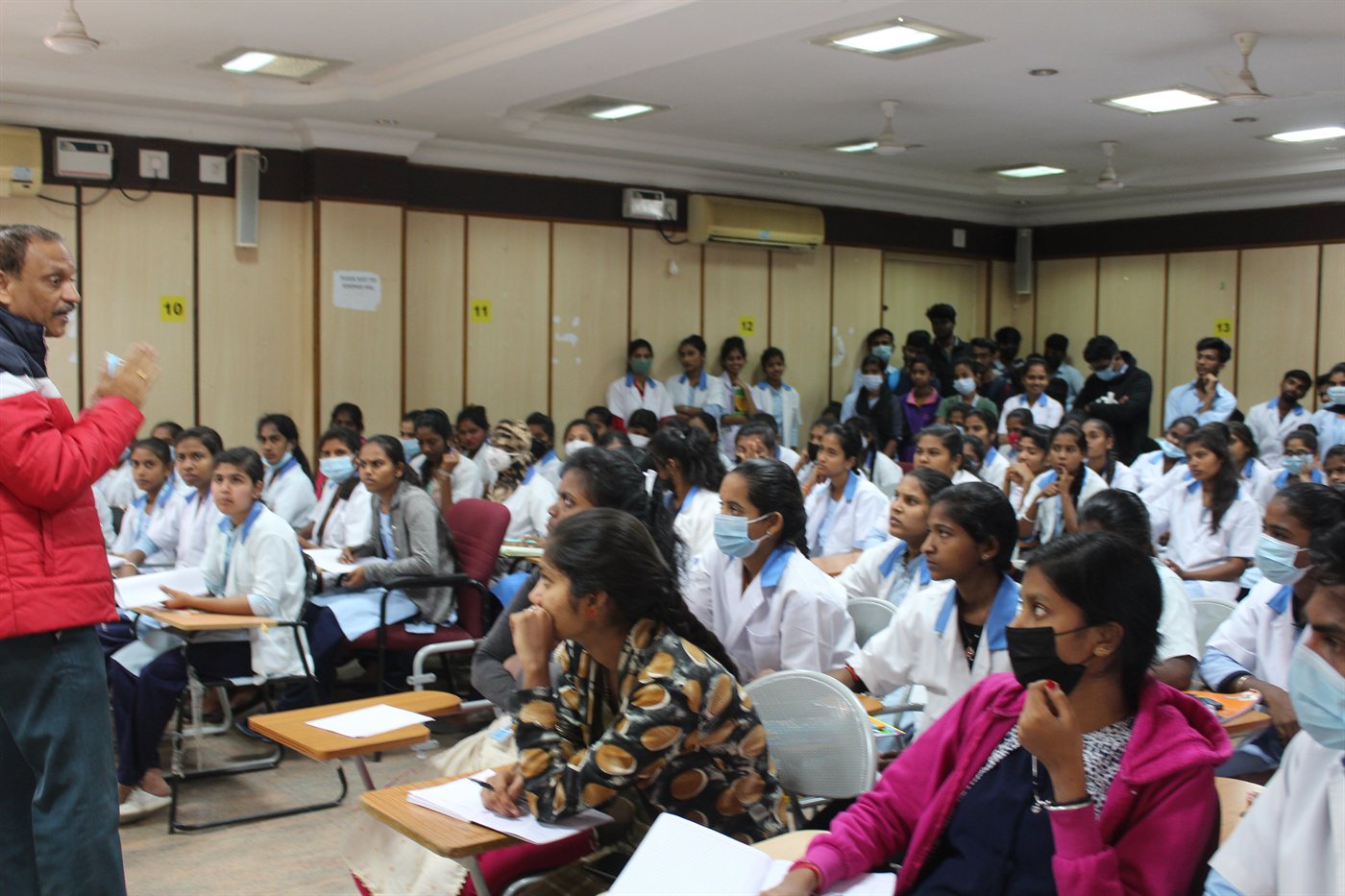
Director Edwin P. S. Sundaram conducting an intensive clinical training session for municipal healthcare workers, explaining nerve assessment techniques and patient counseling methods.
W.H.O. Action Research & Community Health
A significant institutional milestone was SJJ's collaboration with the Bangalore City Corporation and the World Health Organization (W.H.O.) on Action Research studying the social determinants affecting Healthy Urbanization. This rigorous field research demonstrated the direct link between rapid deterioration of community health and unsafe drinking water alongside inadequate environmental sanitation in informal urban settlements.
Drawing from these research findings, SJJ institutionalized ongoing mother & child healthcare, hygiene education, and environmental sanitation programs that continue to benefit over 1,800 children and women annually.
Two-Track Rehabilitation for Persons with Disabilities
In Community-Based Rehabilitation (CBR) for persons with disabilities (PWDs) and those affected by leprosy, SJJ implements a balanced two-track methodology:
- Track 1 — Individual Empowerment: Direct assistance for affected individuals through assistive aids, education, vocational skill building, and sustainable livelihood opportunities to achieve personal self-reliance.
- Track 2 — Collective Rights & Inclusion: Capacitating and strengthening self-help organizations of persons with disabilities and leprosy-affected persons, enabling them to collectively advocate for statutory entitlements, public accessibility, and social inclusion.
Evolution: Expanding to Child Protection & Human Rights
Over the decades, SJJ applied its community trust and grassroots presence to address vulnerable children and structural exploitation in rural and peri-urban Karnataka:
- Child Welfare & Protection (Ramanagara District): SJJ founded the District Missing Children Bureau in Ramanagara in 2010. Since 2016, SJJ serves as the collaborative partner for the Ministry of Women and Child Development's CHILDLINE 1098 emergency toll-free service in Ramanagara district. SJJ also establishes Child Rights Clubs in schools to foster child-friendly environments.
- Abolition of Bonded Labour System: Identifying trapped laborers in brick kilns, stone quarries, and agricultural estates across Ramanagara, Kanakapura, Tumakuru, and Madhugiri. Working with District Legal Services Authorities (DLSA) to secure statutory release certificates and rehabilitation support.
- Anti-Human Trafficking Advocacy: Collaborating with the judiciary and law enforcement to observe the World Day Against Trafficking in Persons and training grassroots Panchayat Development Officers (PDOs) on legal accountability.
- Socio-Economic Empowerment of Marginalized Women: Mobilizing women into Self-Help Groups (SHGs) across rural Ramanagara and urban Bengaluru settlements, offering certified vocational skill training in dressmaking and embroidery to ensure economic self-reliance.
Communities We Serve
SJJ's programs are strictly tailored to individuals and families who face compounding social barriers:
Persons Affected by Leprosy & Disabilities
Wound care, MDT coordination, assistive devices, livelihood support, and collective advocacy.
Vulnerable Children & Youth
24/7 CHILDLINE 1098 emergency rescue, Missing Children Bureau tracing, and Child Rights Clubs.
Liberated Bonded Labourers
Facilitating statutory release certificates, legal aid via DLSA, and livelihood rebuilding.
Marginalized Women & Mothers
SHG micro-savings, vocational dressmaking & embroidery, and mother & child healthcare.
Leadership & Governance
Founded by professional social workers and medical personnel, SJJ is guided by Director Edwin P. S. Sundaram. Under his stewardship, the organization maintains direct, unmediated engagement on the ground in Karnataka, working in close collaboration with government health authorities, the judiciary, and local municipal corporations.
The organization operates from its registered office in Shanthinagar / Adugodi, Bengaluru. All administrative, financial, and field documentation is maintained with rigorous transparency and is accessible to authorized institutional partners.
Documentary Media & Press Archives
Independent coverage of SJJ's field conventions, worker rescues, health camps, and judicial partnerships published in leading Kannada newspapers (Prajavani, Kannada Prabha, Vijayavani).
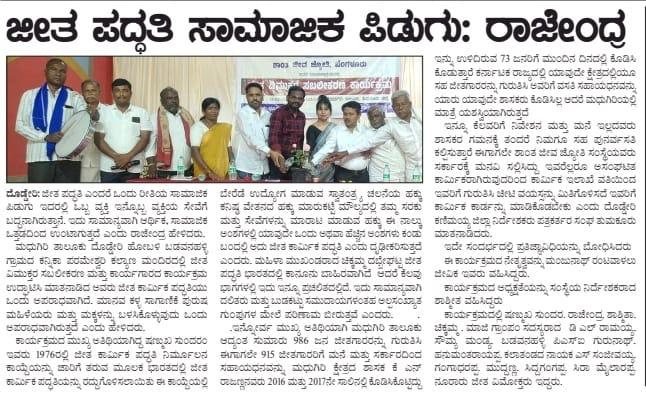
Madhugiri Survivors' Meet
Press reporting on convention of released bonded workers organizing for rehabilitation rights.
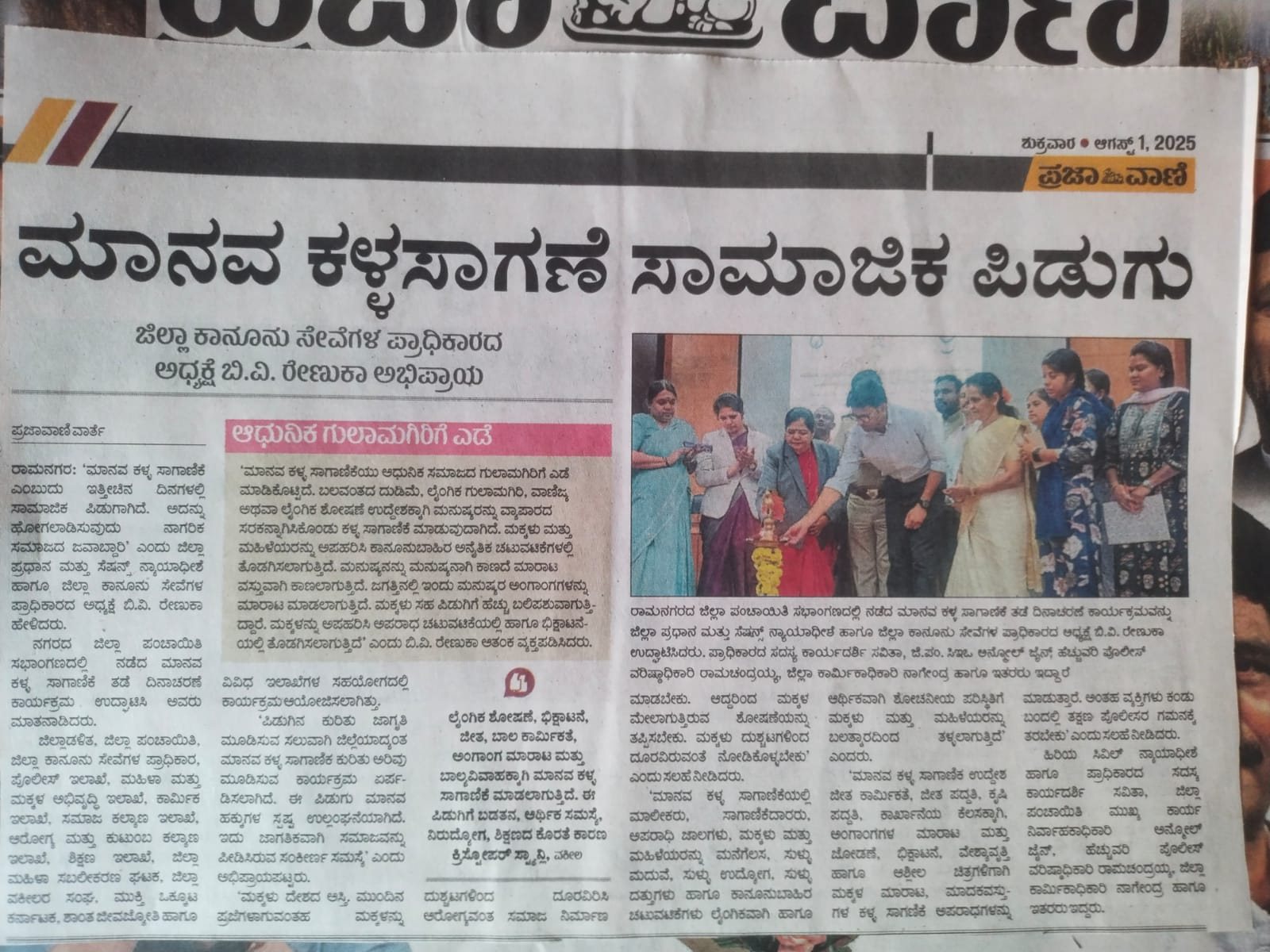
District Anti-Trafficking Day
Coverage of district level convention with principal sessions judges and police superintendents.
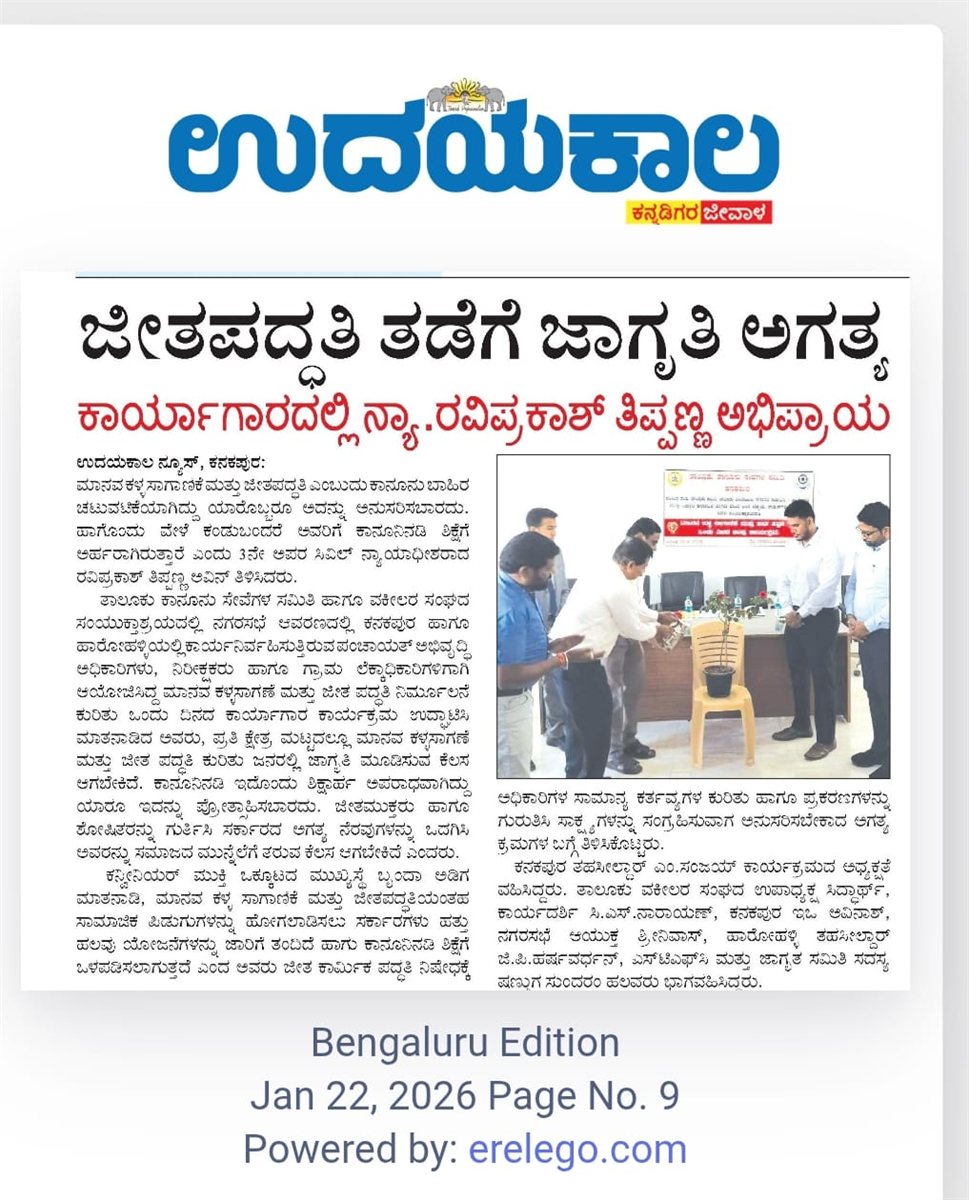
PDO Training Workshop
Kannada daily report on administrative training on the Bonded Labour Abolition Act.